
The British aesthetics industry is experiencing a period of rapid growth and transformation. Non-surgical cosmetic procedures have become increasingly popular, with patients seeking treatments that enhance appearance while avoiding surgery and lengthy recovery times. As the industry expands, so too does the focus on safety, education, regulation, and evidence-based practice.

There are two trends that are currently dominating professional conversations within aesthetics: Level 7 aesthetics qualifications and facial ultrasound training. While they are separate entities and developments, both are helping to shape the future of aesthetic medicine. Practitioners are increasingly recognising the value of advanced education and innovative technology as tools for improving patient outcomes and building professional credibility.
The rise of these trends reflects a wider shift within the industry towards higher standards, greater accountability, and a stronger emphasis on patient-centred care.
Why Level 7 Aesthetics Is Trending?
Level 7 qualifications are becoming one of the most discussed topics in aesthetics in the UK. Equivalent to postgraduate masters-level education, these programs are designed to provide practitioners with a deeper understanding of aesthetic medicine.
Unlike short courses that focus primarily on treatment techniques, Level 7 programmes explore advanced anatomy, ageing processes, consultation skills, ethics, governance, and complications management. This broader educational approach encourages practitioners to think critically and make informed clinical decisions.
As patients become more informed, they are increasingly looking for practitioners who can demonstrate advanced training and a commitment to professional development. A Level 7 qualification helps communicate this commitment and is often viewed as a benchmark of quality within the industry.
Benefits of Advanced Education
One of the key benefits of Level 7 education is the development of a strong theoretical foundation. Understanding anatomy, physiology, and facial ageing enables practitioners to tailor treatments to individual patients rather than adopting a one-size-fits-all approach.
Advanced education can also improve consultation skills, helping clinicians identify patient expectations, assess suitability for treatment, and manage risks effectively. In an industry where patient trust is essential, these skills are invaluable.
Furthermore, Level 7 programmes encourage reflective practice and evidence-based decision making. Practitioners learn to evaluate research, stay informed about emerging developments, and continuously improve their clinical practice.
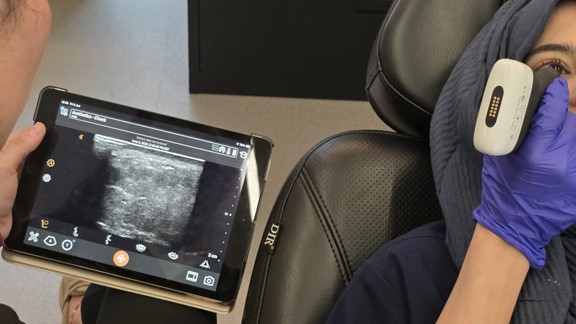
The Rise of Facial Ultrasound
Alongside advanced education, facial ultrasound has emerged as one of the most exciting innovations in aesthetics. Originally used in medical imaging and diagnostics, ultrasound technology is increasingly being adopted by aesthetic practitioners. Facial ultrasound allows clinicians to visualise structures beneath the skin in real time. This includes blood vessels, muscles, salivary glands, ligaments, fat compartments, scar tissue, and previously placed dermal fillers. The ability to see beneath the surface provides information that cannot be obtained through visual assessment alone. As a result, ultrasound is becoming a valuable addition to modern aesthetic practice.
Why Facial Ultrasound Is Growing in Popularity
Several factors have contributed to the rapid growth of facial ultrasound. Firstly, there is an increasing focus on patient safety. Practitioners are continually looking for ways to reduce risk and improve treatment planning.
Secondly, many patients have undergone multiple cosmetic procedures over several years. Some may be unsure about what products were used or where they were placed. Ultrasound can help practitioners assess existing filler and better understand the anatomy of previously treated areas.
Thirdly, advances in technology have made ultrasound equipment more accessible than ever before. Devices are becoming more portable, more user-friendly, and capable of producing high-quality images that support clinical decision-making.
Patient Safety and Industry Standards
Patient safety remains one of the most important priorities within aesthetics. Although serious complications are uncommon, they can occur and may have significant consequences for patients.
Both Level 7 education and facial ultrasound support safer practice. Education provides practitioners with the knowledge required to understand anatomy, recognise complications, and respond appropriately. Ultrasound provides additional information that can support assessment and treatment planning.
Together, these developments contribute to a culture of continuous improvement and risk reduction. They also align with growing calls for greater professionalism and accountability within the industry.
Evidence-Based Practice
The future of aesthetics is increasingly evidence based. Patients expect treatment recommendations to be supported by scientific knowledge rather than trends or marketing claims.
Level 7 programmes encourage practitioners to critically appraise research and apply evidence to clinical practice. Ultrasound complements this approach by providing objective visual information about facial structures.
The combination of education and technology allows practitioners to make more informed decisions and provide a higher standard of care. This is particularly important as aesthetic medicine continues to evolve and new treatments enter the market.

The Future of Aesthetic Medicine
Looking ahead, the demand for highly skilled practitioners is likely to continue growing. Patients are becoming more selective about who performs their treatments and are placing increasing importance on qualifications, experience, and safety.
Practitioners who invest in advanced education and embrace emerging technologies will be well positioned to meet these expectations. Level 7 qualifications and facial ultrasound are not simply trends; they represent a broader movement towards excellence within the industry.
As regulation develops and standards continue to rise, these areas are likely to play an increasingly important role in defining best practice within aesthetic medicine.
The aesthetics industry is entering a new era. Education, innovation, and patient safety are becoming central to successful practice. Level 7 qualifications provide practitioners with advanced knowledge and critical thinking skills, while facial ultrasound offers a powerful tool for understanding anatomy and supporting clinical decision-making.
Although they are distinct developments, both trends share a common goal: improving standards and delivering better outcomes for patients. Practitioners who embrace these opportunities are positioning themselves at the forefront of modern aesthetic medicine.
For the aesthetics industry, the future is clear. Higher standards, greater professionalism, and a commitment to evidence-based care will continue to shape the next generation of practice. Level 7 education and facial ultrasound are leading that transformation.