Patient

Your Safety, Our Priority: Pre-Treatment Ultrasound Mapping

If you are preparing for an aesthetic procedure and have a history of complications, previous facial surgery, or seek the highest safety standard, our diagnostic ultrasound mapping is designed for you.

We take the guesswork out of facial aesthetics.

Who Needs Aesthetic Facial Mapping?

 High-Risk History: Patients who have experienced previous filler complications (nodules, lumps, migration, vascular events)

Altered Anatomy: Individuals who have undergone previous facial surgery(facelift, rhinoplasty, facial implants) or experienced facial trauma/scarring.

Peace of Mind: Anyone seeking maximum safety for their first treatment or treatment in high-risk areas (temples, nose, tear trough).

What Does Facial Mapping Involve?

The Safe, simple mapping process:

 Step One: Health Questionnaire: Establishing your medical and aesthetic history.

Step Two: The Scan: Using a non-invasive high-frequency ultrasound device, we undertake a twelve-point face check for complete clarity.

Step Three: Anatomical Report: We create a detailed, real-time map of your vascular structures, existing filler pockets and deep tissue layers.

Step Four: Practitioner Guidance: This critical map is shared with your chosen aesthetic provider to guide their injection plan, ensuring they avoid critical vessels and target exact areas.

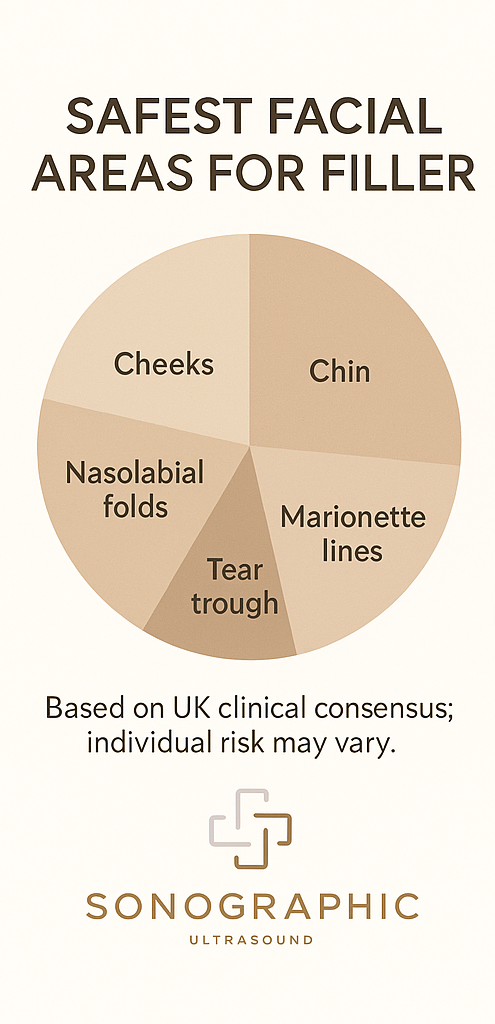
Avoiding Tyndall Effect and Oedema: Tear Troughs

Do You Have Concerns About the Safety of Marionette Line Fillers?

Protect Your Vision During Nasal Filler

Avoiding Lumps and Asymmetry: Chin and Jaw

Is Lip Filler Safe?

Are Cheek Fillers High Risk?

Temple filler Safety