
Do You Have Concerns About The Safety of Marionette Line Fillers

Do You Have Concerns About the Safety of Marionette Line Fillers?

If you’re thinking about marionette line fillers but feel unsure about the safety, you’re not alone. This area is close to important structures under the skin, which can make some patients nervous about risks like unevenness, swelling, or rare vascular issues. Wanting clarity before treatment is completely normal.

Why the Marionette Line Area Needs Careful Treatment

Marionette lines sit between the mouth and chin, where the anatomy can vary from person to person. Because this area contains blood vessels, different tissue layers, and a lot of natural movement, proper filler placement is essential for smooth, natural results.

How Ultrasound Can Make Filler Treatments Safer

Ultrasound allows your practitioner to see exactly what’s beneath the skin in real time. This helps them:
This added level of accuracy helps reduce risks and increases treatment confidence.

Why Many Patients Prefer Ultrasound-Guided Fillers

Patients often say they feel more relaxed and reassured knowing that their anatomy is being visualized throughout the procedure. Ultrasound guidance can help you:
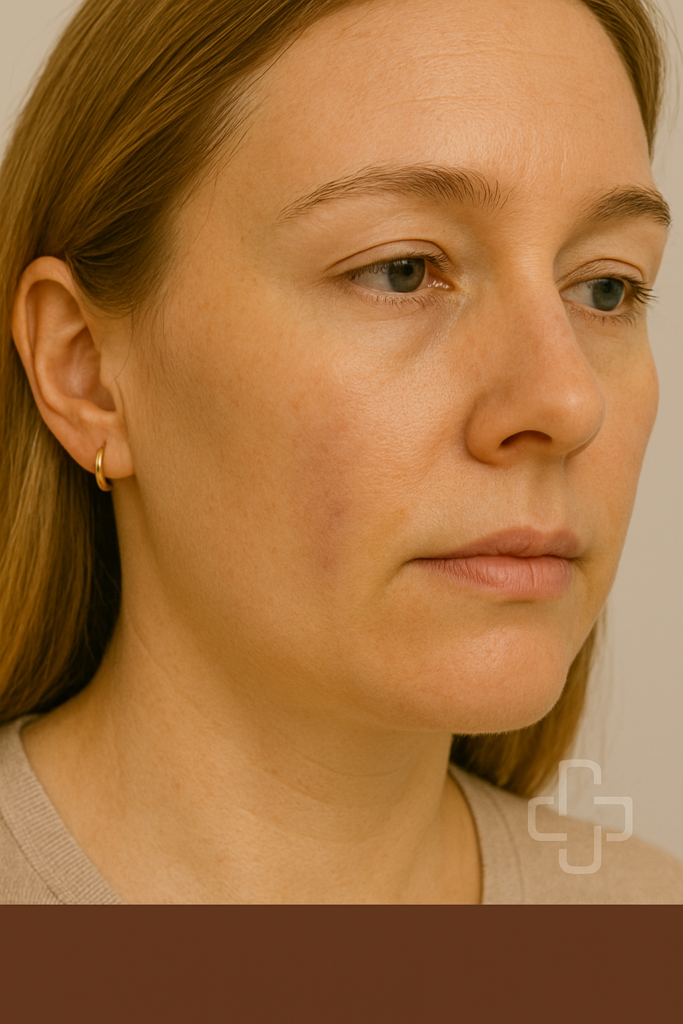
If you’re considering marionette line fillers but want the safest approach possible, ultrasound guidance may give you the peace of mind you’ve been looking for.

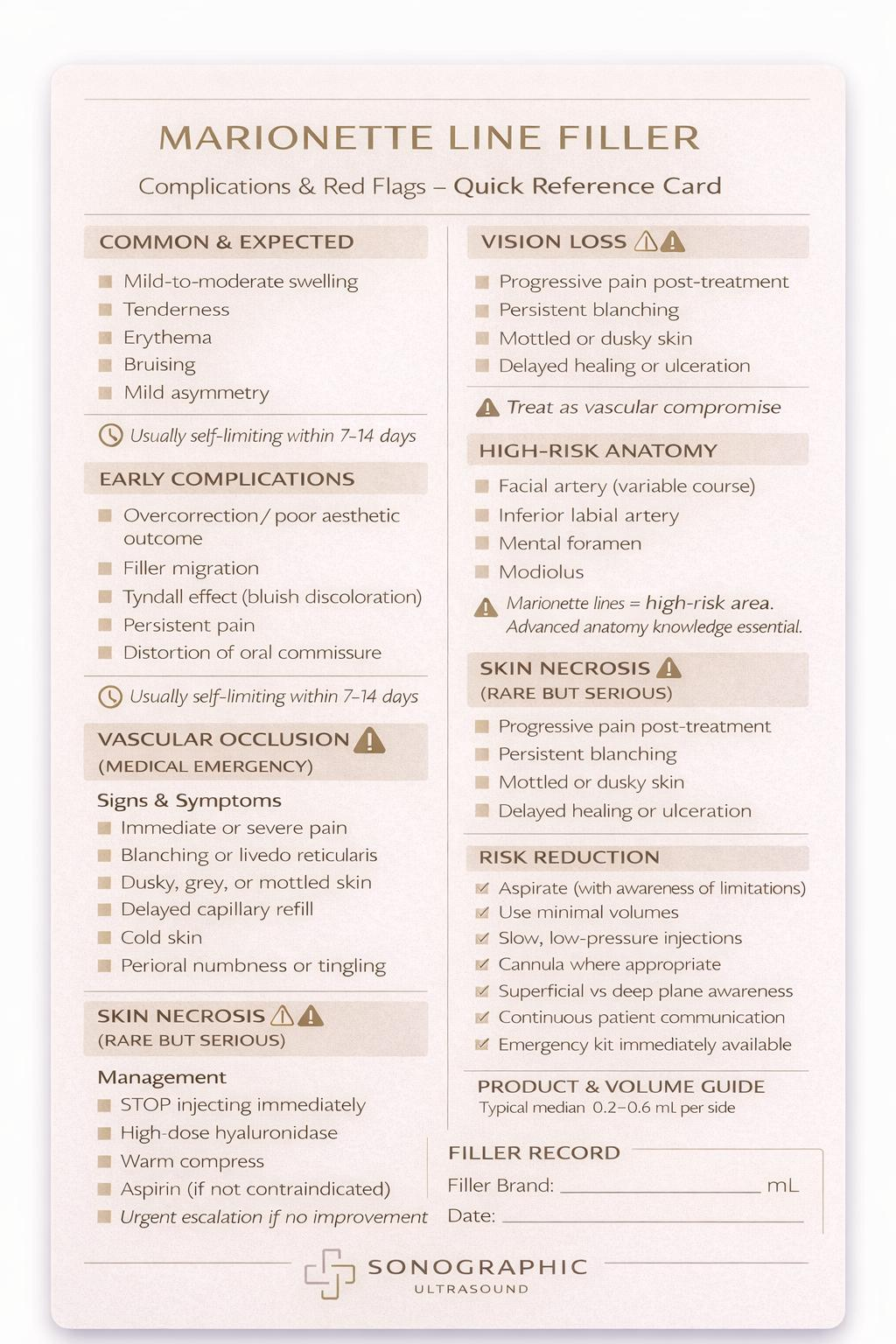
Downloadable Marionette Line Filler Complications Tracking Card

To support patient safety, continuity of care, and regulatory compliance, we offer a downloadable marionette line filler complications tracking card. This card provides a simple, standardised way to record treatment details, early warning signs, and post-procedure observations specific to marionette line treatments, supporting early recognition of complications and robust clinical documentation in this anatomically sensitive area.

Designed to support clinical documentation, patient education, and risk management, the card assists practitioners in meeting professional and regulatory expectations for adverse event awareness, escalation, and record-keeping. It also empowers patients with clear guidance on what to monitor and when to seek clinical review, reinforcing a shared commitment to safe, accountable aesthetic care.
Disclaimer:

This quick reference guide is provided for educational and informational purposes only and is intended for use by appropriately trained medical professionals. It does not constitute medical advice, formal clinical guidance, or a substitute for accredited training, individual clinical judgement, or local regulatory protocols.

Aesthetic procedures carry inherent risks, including rare but serious complications such as vascular occlusion and vision loss. Practitioners must have appropriate training in facial anatomy, complication recognition, and emergency management, including immediate access to appropriate reversal agents and established referral pathways.

Sonographic Ultrasound accepts no liability for clinical decisions made based on this material. Clinicians are responsible for practising within their scope, professional guidelines, and indemnity requirements.

Are You Considering Dermal Filler?

Before treatment, knowledge is peace of mind. A pre-treatment facial mapping scan allows you to understand your unique facial anatomy, identify important blood vessels and structures, and reduce potential risks before any injectable procedure. Booking a facial mapping scan helps ensure your treatment is planned with safety, precision, and transparency at the forefront. It creates a clear record of your anatomy and treatment planning, giving both you and your practitioner confidence every step of the way. If you are considering filler, start with informed decision-making. Book a pre-treatment facial mapping scan for reassurance, safety, and peace of mind.